In the early decades of the 21st century, humanity stood at a crossroads. While biological evolution crawled forward at a glacial pace, technological innovation surged ahead, presenting opportunities to redefine what it meant to be human.
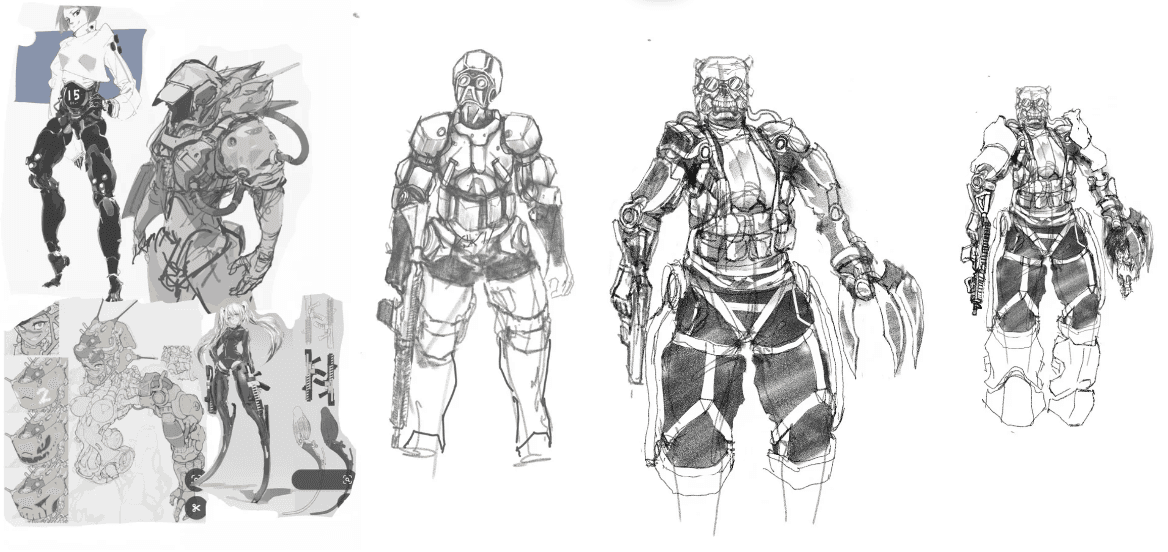
One such breakthrough came with the invention of exosuits, under company EvoTech—a nod to evolution and the next step in human augmentation. The first-generation Evos were designed to assist humanity in overcoming physical limitations. Medical suits restored mobility to the disabled, industrial suits amplified strength for heavy labor, rescue suits empowered first responders in disaster zones, and exploration suits enabled survival in extreme environments. Each design revolutionized its field, enhancing human capability and safety while paving the way for new possibilities.
Origins
Evos was a groundbreaking project by EvoTech Industries, exosuits designed to aid people in dangerous or physically taxing tasks. The suits were simple yet effective, enhancing strength, endurance, and mobility to help responders carry heavy equipment, navigate hazardous terrains, and save lives under extreme conditions. The public admired the suits for their potential to revolutionize emergency response, but things took a darker turn.
The Spark of Control
The rise of exosuits had once been celebrated as humanity’s next great leap. A marvel of engineering and technology, these mechanized shells promised strength for the weak, mobility for the disabled, and safety for laborers in hazardous industries. But as the technology proliferated, so did its darker uses.
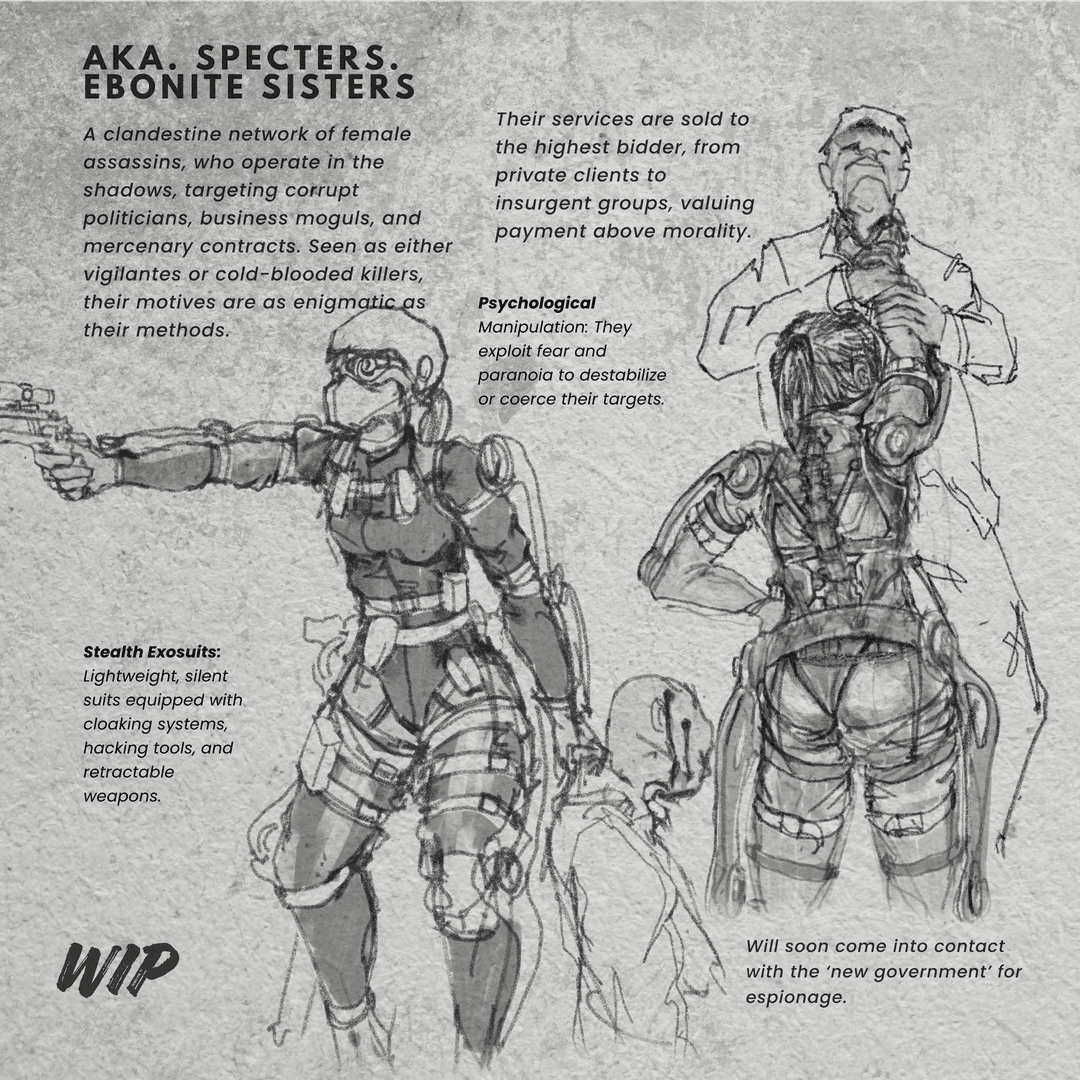
Reports of political assassinations carried out by augmented assailants began to surface, each one more chilling than the last. Exosuits designed for lifting debris or mining deep beneath the earth were now retrofitted with hidden weaponry, capable of devastating precision. No politician, corporate leader, or activist was truly safe. The suits made escape impossible and security measures obsolete. But the fear wasn’t confined to the political elite.
Criminal syndicates capitalized on the exosuits' raw power, using them to rob banks, evade police, and control territories. Even civilians began modifying their suits for personal gain—some for defense, others for reckless destruction. The line between necessity and abuse blurred with every passing day.
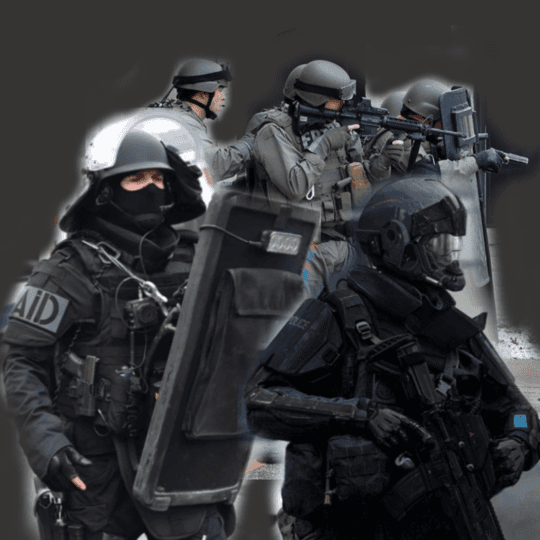
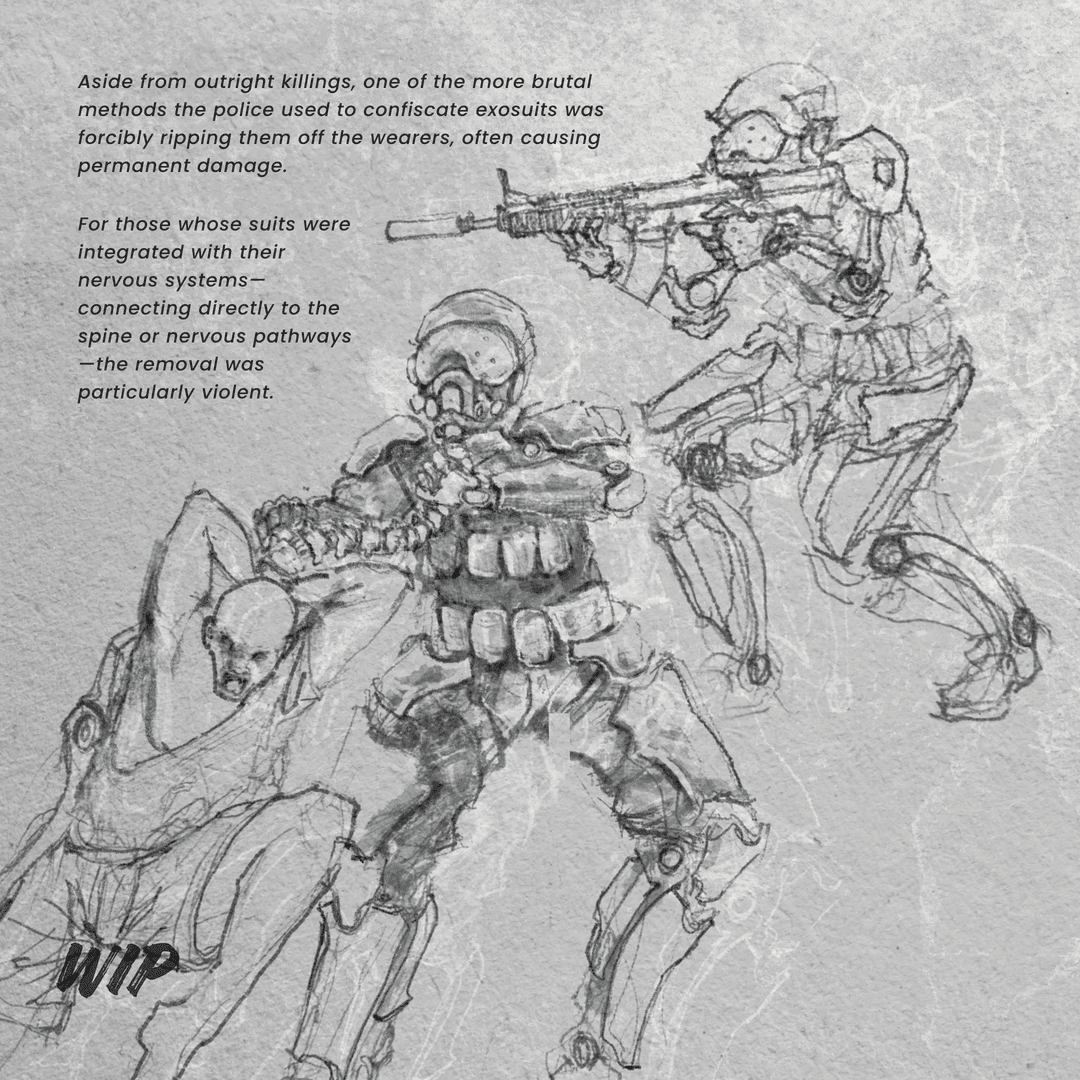
Then came the first whispers of restrictions. Quietly, laws were passed mandating licenses for exosuit ownership, ostensibly to prevent their misuse. Those who couldn’t afford the expensive registration fees saw their suits confiscated, often without notice or compensation. Families who relied on them for work or mobility were left stranded, bitter, and increasingly desperate. Confiscation soon escalated into suspicion. Police forces, overwhelmed by a surge in exosuit-related crimes, began raiding homes under the flimsiest of pretexts. Anyone seen wearing a suit in public risked being labeled a criminal. Even legitimate owners were harassed, their livelihoods torn apart by bureaucratic overreach.
The Public Outcry
When EvoTech and the government announced that exosuits would be exclusively available to government-sanctioned groups like first responders, law enforcement, and the military, the public's initial awe turned to frustration. Many saw the technology as a beacon of hope, especially for disabled individuals, workers in dangerous industries, and small communities struggling with disasters.
Key groups emerged:
Disabled Advocates: Argued that exosuits could transform lives by granting mobility and independence.
Laborers and Miners: Called for exosuits to improve safety and productivity in physically taxing jobs.
Ex-EvoTech employees and Engineers: Took matters into their own hands, building makeshift exosuits out of scrap materials and old machinery.
A Nation in Fear
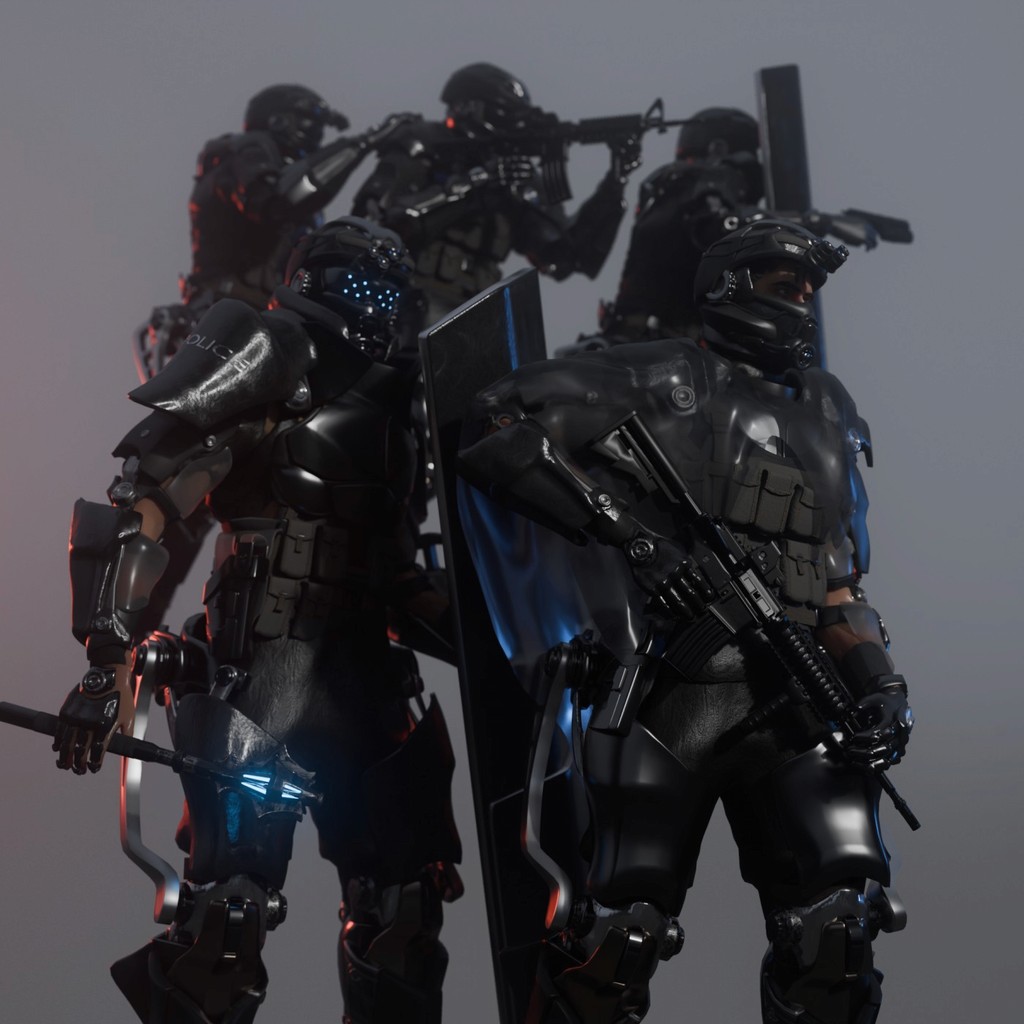
The Prime Minister watched his country unravel from behind the thick glass of his office. He had never imagined that the very technology meant to uplift humanity could drive it to the brink of collapse. But every report of another assassination, every raid-turned-riot, painted a grim picture: if nothing was done, the nation would fall. Against the backdrop of growing unrest, the Prime Minister proposed a bold countermeasure—two specialized exosuits designed not for personal use, but for protection and order. These units would be deployed only by those sworn to defend the public, turning the very power that threatened the nation into its shield.